
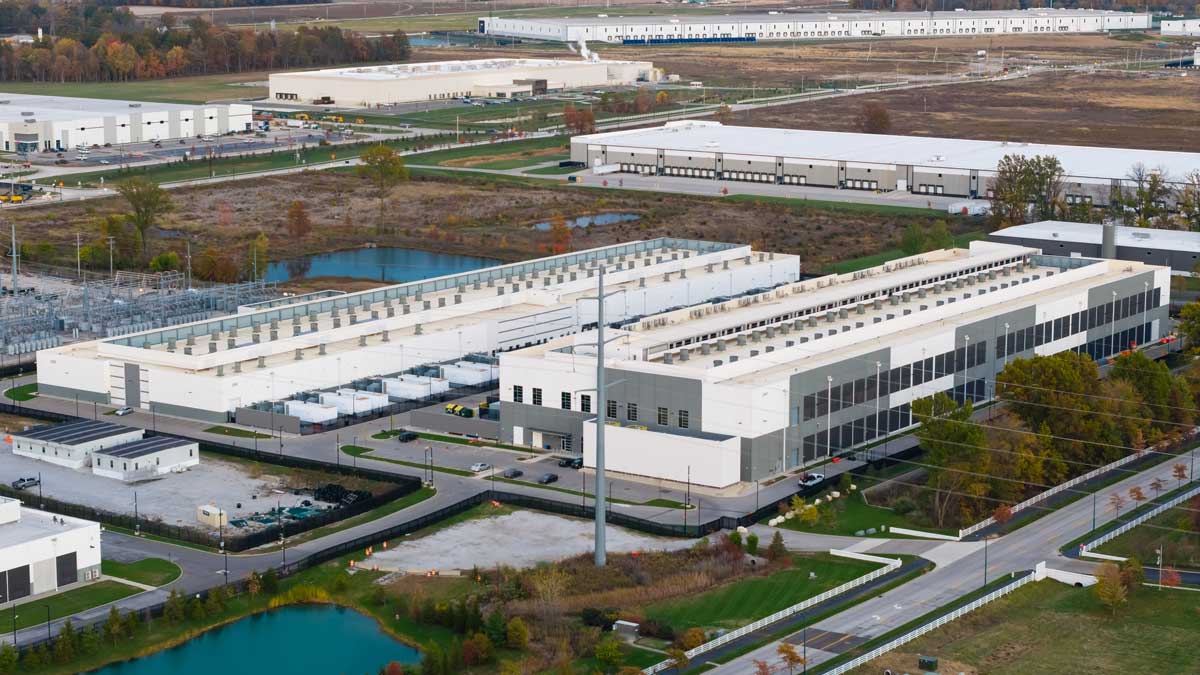
For the union construction industry, 2026 is shaping up to be another busy year in Central Ohio, led by a boom in datacenter construction and other megaprojects.
Continuing the trend of recent years, most tradesmen and tradeswomen should be able to find ample work opportunities in the region.
A couple of weeks into the new year, the workload is already piling up. Affiliated members of the Columbus/Central Ohio Building and Construction Trades Council are expected to be busier than last year, likely setting manhour records by the time the clock strikes midnight on Dec. 31.
Record Work Hours, Again
According to C/COBCTC Executive Secretary-Treasurer Dorsey Hager, the region will likely set a new record for work hours this year.
Last year, affiliated members worked a record 15 million hours, which he believes should be easily eclipsed in 2026.
“I expect members to put in about 17 million hours this year,” Hager said.
For perspective, in 2012, prior to the region’s building boom, Central Ohio tradesmen and tradeswomen logged roughly 4.1 million hours. This year, that total is on track to nearly quadruple.
With the largest megaproject in the state winding down, the H-L Battery Plant, plus work finishing up on a megaproject at The Ohio State University Wexner Medical Center tower, oil and gas and datacenter work are expected to fill the void.
Central Ohio, one of the hottest construction markets in the U.S., continues to lead the state in the sheer number of megaprojects.
“Dollar-wise, 50 percent of work in the entire state is located in Central Ohio,” Hager said. “I think it’s just getting started.”
Beyond datacenters and the power plants needed to support them, Hager pointed to other major work that will keep members busy, including AMGEN, a $2.1 billion wastewater treatment plant in Columbus, ongoing work at OSU and Intel.
He also expects additional project announcements as the year goes on, with the potential for more megaprojects coming into the pipeline.
Hager is hopeful the proposed $400 million renovation and expansion of Nationwide Arena, which would be conducted under a Community Benefits Agreement, will begin sometime in 2026.
Other notable projects covered under CBAs expected to break ground in 2026 include a $300 municipal courthouse in Columbus and a $100 million early childhood learning center.
With the region’s workload surging, there are obstacles that must be addressed, including increasing the number of signatory contractors and ensuring sufficient manpower to meet demand.
“We will be doing outreach targeting small and medium contractors for projects $100 million or less,” Hager said.
He also cautioned that, with so many large projects underway, some signatory contractors are approaching their bonding limits, which can restrict their ability to bid additional work until current projects are completed.